Karthikeyan Sethuraman, Yoga Therapist & Founder, Mindful Yogis
I am a yoga therapist and the founder of Mindful Yogis. Before this work, I was a corporate lawyer. Then I was diagnosed with multiple sclerosis.
Yoga gave me practical ways to take a more active part in living with the condition. That experience is at the root of the work I do now.
My approach
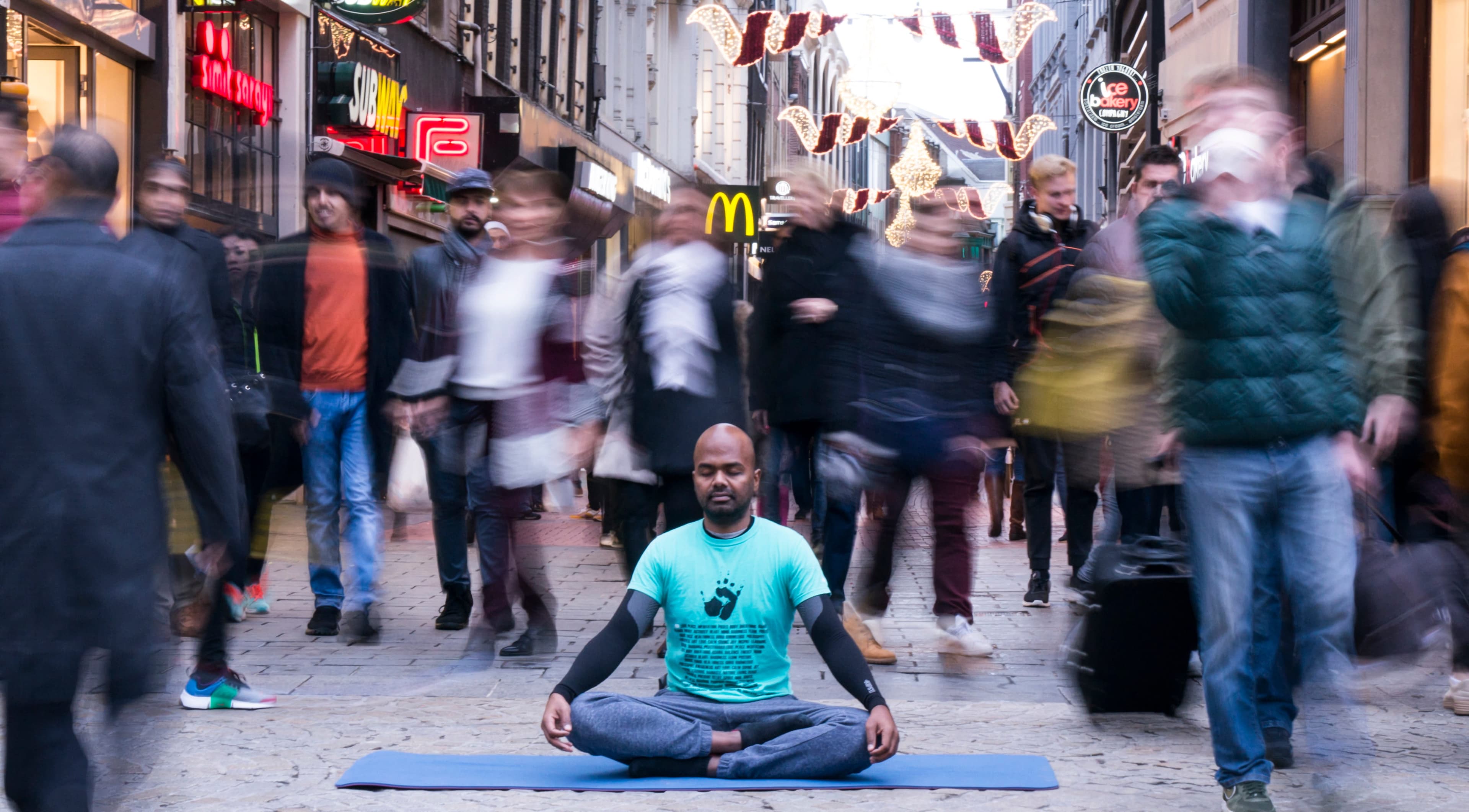
I work with people managing chronic health conditions, particularly non-communicable conditions in which stress, lifestyle, and daily patterns may also play a part.
The first thing I do is listen. Before suggesting a practice, I want to understand your situation properly: your condition, your history, what you are hoping to change, and what is realistic within your present capacity and daily life.
My approach is based on a simple idea. Patterns develop over time. They can influence how we move, breathe, rest, respond to stress, and relate to our own health. Yoga therapy gives us a way to work with some of these patterns through practice.
My role is to understand, guide, adapt, and review. The larger part of the work belongs to you. Change does not come from a single session or simply from receiving guidance. It develops through the practice you are able to return to consistently.
This is different from a general yoga class. Therapeutic work begins by understanding the person in front of me and considering what may actually be appropriate for their condition, capacity, and circumstances.
Meaningful change generally does not come from a few isolated sessions. This is why programmes at Mindful Yogis are structured over several weeks, with time to practise, observe what changes, and adapt the practice where needed.
A diagnosis also affects more than the body. It can change how you think about yourself, your future, and what you can rely on. I know something of this from living with multiple sclerosis myself. There is a difference between having a condition explained to you and learning how to live with it day by day.
Where you are already working with a doctor, specialist, physiotherapist, psychologist, or another healthcare professional, my work sits alongside that care.
How these pieces came together
I began in corporate law, in a working culture of deadlines, long hours, and pushing through. Being diagnosed with multiple sclerosis changed how I thought about health, and about what I could rely on.
Looking for practical ways to take a more active part in living with the condition led me to study yoga in greater depth, and then to an MSc in Yoga at S-VYASA, including research on burnout and sleep. Mindful Yogis grew from bringing those threads together: lived experience, classical yoga, and careful, reviewed practice.
Training and experience
Education and training
- MSc in YogaS-VYASA, BengaluruPostgraduate training in yoga philosophy, anatomy and physiology, therapeutic application, and research.
- 200-hour Yoga Instructor CertificationS-VYASAFoundation training in classical yoga practice and teaching.
- De-mystifying MindfulnessLeiden UniversityUniversity study of mindfulness and its application in everyday contexts.
- B.A. LL.B. (Hons.)NLSIU, BengaluruLegal training that informs how I approach consent, scope of practice, and professional ethics.
Applied and research experience
- Consultant Yoga Therapist at Ayush Prana, KeralaApplied yoga therapy work in an MS care setting.
- Supervised placement at Arogyadhama, the S-VYASA yoga therapy health centreYoga therapy for chronic conditions.
- Research thesisImpact of online yoga on burnout among adults in the Netherlands. A study of 30 participants who followed the programme, examining changes in burnout and sleep.How we measure this →
Professional experience
- Wellness workshops delivered for Shell, ING, IBM, ABN AMRO, and Fluor
- Ongoing course-based yoga therapy work at the University of Amsterdam
Continuing education
- Yoga in Cancer Care International ConferenceKaivalyadhama, December 2024
- International Conference on Multiple SclerosisMogasam Foundation, Sofia, May 2025
The Panchakosha Model
Classical yoga describes human experience through the Panchakosha, a five-layer model encompassing physical, energetic, mental, discerning, and deeper aspects of experience. I use it as a traditional framework for remembering that health is not experienced through the body alone. It is not a biomedical model.
Annamaya Kosha
The physical body
The layer of the physical body and its movement, in the classical five-layer model.
Pranamaya Kosha
The energetic body
The layer of breath and vitality as described in the yoga tradition.
Manomaya Kosha
The mental body
The layer of mind, emotion, and habitual patterns of perception.
Vijnanamaya Kosha
The discerning body
The layer of discernment, self-awareness, and insight.
Anandamaya Kosha
The deeper body
The subtlest layer, associated in the tradition with ease and a sense of connection.
I cannot recommend Karthikeyan's approach enough to anyone interested in authentic yoga or interested in exploring themselves. There is much more to the yogic tradition than most of us in the west are exposed to. He does an outstanding job at facilitating that journey.
If any of this resonates, a conversation is the best place to start.
The consultation is 30 minutes, no charge, and no pressure. The conversation can help us consider whether yoga therapy is appropriate for your situation.
Book a Free Consultation